The Allman Brothers Band
«We're not a jam band. We're a band that jams!» |
| (Gregg Allman) |
La Allman Brothers Band è stato un gruppo statunitense formatosi a Jacksonville, Florida, tra il 23 e il 26 marzo 1969 attorno ai fratelli Duane e Gregg Allman. Sono considerati i principali inventori del southern rock, genere nato dalla fusione di elementi del blues, del rock, del country e del jazz in generale.
La discografia ufficiale comprende dodici album studio, quattordici album live e sedici raccolte. Nel 1995 la Allman Brothers Band è entrata a far parte della Rock and Roll Hall of Fame.
Storia del gruppo
Duane e Gregg: gli inizi (1959-1968)
Howard Duane Allman nasce il 20 novembre 1946 a Nashville, nel Tennessee, seguito, l'8 dicembre 1947, dalla nascita di Gregory Lenoir Allman. Nel 1957, pochi anni dopo l'assassinio del padre, un ex sergente dell'esercito statunitense la famiglia si trasferisce a Daytona Beach, Florida, alla ricerca di migliori condizioni di vita.
Nell'estate del 1959 Duane e Gregg si recano al Nashville Auditorium per vedere il loro primo concerto di rock 'n'roll: si esibivano B.B. King e Jackie Wilson. Ricorda Gregg:
|
«A metà del concerto io e mio fratello ci siamo guardati e abbiamo deciso che quella era la nostra strada. Anche noi volevamo salire su quel palco. E praticamente non sapevamo ancora niente di musica.» |
| (Gregg Allman) |
Tornati in Florida, i fratelli iniziano a studiare musica seriamente. Nel 1960 Gregg consegna giornali per permettersi l'acquisto di una chitarra acustica modello Sears. Anni dopo l'acquisto dello strumento, dichiarerà:
|
«Dividendoci la chitarra siamo diventati veramente amici, avevamo finalmente qualcosa in comune. Prima di allora eravamo i tipici fratelli sempre pronti a litigare e a picchiarci. Dopo no, la musica ci ha unito definitivamente.» |
| (Gregg Allman) |
Duane abbandona la scuola per meglio dedicarsi allo studio della chitarra da autodidatta, mentre Gregg termina il liceo. A partire dal 1961 i fratelli suonano in vari complessi giovanili come chitarristi, e solo nel 1965 formano un proprio gruppo: gli Allman Joys. Questi suonano dal vivo cover di canzoni come I'll Go Crazy di James Brown e nel 1966 registrano il loro primo 45 giri proponente una reinterpretazione di Spoonful di Willie Dixon. Un anno dopo le scarse vendite del vinile e il basso successo riscosso dal gruppo conducono la band ad un inevitabile scioglimento.
Nel 1967 i fratelli formano gli Allman-Act assieme a Paul Hornsby, Johnny Sandlin e Mabron McKinney, che successivamente verrà rimpiazzato da Pete Carr. In breve tempo ottengono un'audizione dalla Liberty Records, che li mette sotto contratto e cambia il nome del gruppo in Hour Glass. La band registra due album: l'omonimo Hour Glass, nel 1967, e Power of Love, nel 1968. L'etichetta discografica, interessata quasi esclusivamente alle doti canore di Gregg, esercita uno stretto controllo sullo stile musicale del gruppo. Questo provoca una forte insoddisfazione tra i componenti della band, tanto che si scioglierà nel 1968. A causa degli impegni contrattuali, solo Gregg continuerà a lavorare per la Liberty Records.
Durante il suo girovagare per l'Alabama alla ricerca di una nuova band, Duane conosce Dickey Betts e Berry Oakley, all'epoca rispettivamente chitarrista e bassista dei Second Coming, e suona alcuni pezzi con il loro gruppo. In quel periodo collabora inoltre come session man a fianco di musicisti come Wilson Pickett, Aretha Franklin, Percy Sledge, Boz Scaggs e Herbie Mann.
La nascita e l'esordio della Allman Brothers Band (1969-1970)
Il 23 marzo 1969 a Jacksonville, Butch Trucks, ex batterista dei The 31st of February e da tempo amico dei fratelli Allman, organizza nel suo garage una jam session tra amici assieme a Duane, Dickey Betts, Berry Oakley, Jay "Jaimoe" Johannson e Reese Wynams. Dopo una lunga improvvisazione di oltre tre ore che lascia increduli i partecipanti per la qualità della loro prestazione, i musicisti decidono di unirsi in quella che poco dopo diventerà la Allman Brothers Band. Il 24 marzo Duane telefona a Gregg per raccontargli della jam del giorno prima, convincendolo così ad unirsi al gruppo in qualità di cantante, organista e tastierista – Reese Wynams infatti ha rifiutato di unirsi al gruppo. Il 25 marzo Gregg arriva da Los Angeles e quattro giorni dopo la Allman Brothers Band tiene il primo concerto al Jacksonville Beach Coliseum. La formazione del gruppo è dunque composta da Gregg Allman al microfono e alle tastiere, Duane Allman e Dickey Betts alle chitarre, Butch Trucks e Jai Johanson alle batterie e Berry Oakley al basso.
Due settimane dopo vengono messi sotto contratto da Phil Walden che aveva da poco fondato la Capricorn Records assieme al fratello Adam Walden e Frank Fenter.
La band si esibisce in numerosi live show tra cui l'importante Atlanta International Pop Festival del 1969 nel quale, davanti ad oltre 100.000 spettatori, condivide il palco con gruppi come Canned Heat, Creedence Clearwater Revival e Led Zeppelin.
Nel novembre dello stesso anno esce, prodotto da Adrian Barber sotto l'etichetta della Capricorn Records, The Allman Brothers Band, omonimo album di debutto registrato solo due mesi prima negli Atlantic Recording Studios di New York. L'album si piazza al numero 188 della Billboard 200, mentre Dreams, l'unico singolo tratto dall'album, non riesce a classificarsi nella Billboard Hot 100 Il principale autore del disco è Gregg Allman: cinque dei sette brani
dell'album sono opera sua (gli altri due sono le reinterpretazioni di Don't Want You No More e Trouble No More), e tra questi vi è anche la celebre Whipping Post, che in seguito diventerà una delle 500 canzoni che hanno formato il rock and roll secondo la Rock and Roll Hall of Fame.
L'accoglienza riservata all'album dalla critica è generalmente molto positiva. All Music lo definirà un forte, potente disco di blues elettrico con elementi soul.
Di fatto The Allman Brothers Band è un album blues rock rivisto in chiave hard rock e psichedelica
grazie all'utilizzo dell'organo e della chitarra slide, strumenti che
diventeranno marchi di fabbrica del gruppo. Da questo disco nasce
inoltre una prima versione del southern rock,
che in seguito verrà arricchito di elementi musicali dagli stessi
Allman Brothers e da diverse band che ne faranno il loro marchio di
fabbrica, come i Lynyrd Skynyrd.
Il gruppo intanto continua a esibirsi in giro per gli States con una media di 250 concerti tenuti tra l'inizio del 1969 e la fine del 1970. Nel febbraio 1970 la band si esibisce al Fillmore East; il concerto uscirà nel 1996 nell'album Fillmore East, February 1970. Ad aprile gli Allman Bros. suonano invece al Ludlow Garage di Cincinnati; la registrazione del concerto sarà il contenuto dell'album Live at Ludlow Garage: 1970, che uscirà nel 1991. Partecipano anche alla seconda edizione dell'Atlanta International Pop Festival, con un pubblico stimato tra i 350.000 e i 500.000 spettatori. Solo nel luglio 2003 uscirà Live at the Atlanta International Pop Festival: July 3 & 5, 1970, un doppio album contenente la registrazione dell'esibizione del gruppo.
Tra il febbraio e il luglio dello stesso anno, la band aveva inoltre partecipato alle registrazioni dell'album Idlewild South tenutesi nei Capricorn Sound Studios di Macon (Georgia) e i Criteria Studios di Miami, Florida.
Il disco esce nel mese di settembre, prodotto da Tom Dowd per la
Capricorn Records, e riscuote un successo commerciale molto maggiore
rispetto al precedente, raggiungendo il numero 38 nella Billboard
Charts. Dei singoli estratti dall'LP, Revival e Midnight Rider
entrano a far parte della Billboard Hot 100, classificandosi
rispettivamente al novantaduesimo e al diciannovesimo posto, anche se il
singolo Midnight Rider vedrà la luce sul mercato ben due anni dopo l'uscita dell'album. L'album contiene i primi due brani composti da Dickey Betts: il già citato Revival e la celebre In Memory of Elizabeth Reed,
il primo pezzo strumentale del gruppo dedicato alla defunta Elizabeth
Reed Napier sepolta al Rose Hill Cemetery di Macon, luogo dove Dickey
Betts era solito scrivere. Eccetto l'unica cover presente nell'LP, quella di Hoochie Choochie Man che vede Berry Oakley alla prima ed unica prova da cantante, i restanti brani sono di Gregg Allman.
Di nuovo, la critica è generalmente entusiasta del lavoro svolto dal
gruppo ma Duane dichiara di sentirsi frustrato poiché in studio la band
non riesce ad esprimere le proprie capacità come dal vivo e dunque
annuncia l'imminente uscita di un nuovo album live .
Alla fine dell'estate viene inoltre registrato Layla and Other Assorted Love Songs, primo e unico album studio dei Derek and the Dominos, che aveva visto la partecipazione di Duane come chitarrista. Grazie alla vicinanza tra Duane e il supergruppo di Eric Clapton, i fratelli Allman, Betts e Oakley della Allman Brothers Band suonano una jam assieme a Clapton e Bobby Whitlock dei Derek and the Dominos. La jam verrà inclusa vent'anni dopo nel secondo disco di The Layla Sessions: 20th Anniversary Edition.
Sul finire dell'anno, il 13 dicembre 1970, gli Allman Bros. si esibiscono all'American University di Washington; la registrazione del concerto uscirà nel 2002 nel disco American University 12/13/70. Lo stesso mese, Layla and Other Assorted Love Songs vede la luce sul mercato.
La consacrazione del gruppo (1971-1972)
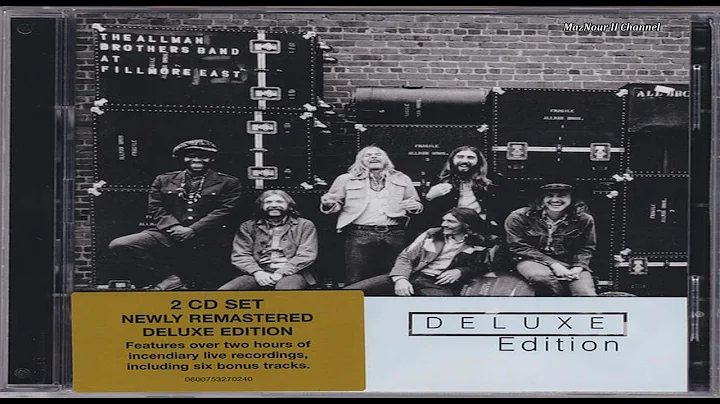
Nel luglio dello stesso anno una parte delle registrazioni dei concerti tenuti il 12 e 13 marzo diventa uno dei primi doppi LP dal vivo della storia: esce infatti At Fillmore East, prodotto nuovamente da Tom Dowd per la Capricorn Records. L'album, che presenta rivisitazioni di classici del blues e canzoni degli stessi Allman Brothers contenenti numerose e lunghe improvvisazioni in stile jazz al loro interno, raggiunge il tredicesimo posto nella Billboard Charts e si afferma subito come uno degli album più importanti mai registrati dal vivo. Nel 1992 uscirà The Fillmore Concerts, contenente l'intera registrazione dei due concerti e nel 2003 sarà la volta di At Fillmore East: Deluxe Edition, che proporrà nuovo materiale prelevato dalle raccolte Duane Allman: An Anthology e Dreams. Nel maggio 2007 Dickey Betts dirà in merito a At Fillmore East:
| (EN)
«I think it's one of the greatest musical projects that's ever been done in any genre. It's absolutely honest; an honest representation of our band and an honest representation of the times.» |
(IT)
«Penso sia uno dei più grandi progetti musicali che siano mai stati fatti in un qualsiasi genere. È assolutamente onesto; un'onesta rappresentazione della nostra band e un'onesta rappresentazione dell'epoca.» |
| (Forrest Richard "Dickey" Betts) | |
Nel 2004 l'album è stato aggiunto alla National Recording Registry: una lista di registrazioni culturalmente e storicamente importanti che riflettono la vita negli Stati Uniti d'America.
Malgrado l'ormai forte dipendenza da droghe da parte dei componenti del gruppo, la Allman Brothers Band continua una frenetica attività live: dal concerto tenutosi il 17 agosto a Boston uscirà, nel 2007, l'album Boston Common, 8/17/71, mentre dall'esibizione del 19 settembre all'Università statale di Stony Brook verrà ricavato, nel 2003, l'album S.U.N.Y. at Stonybrook: Stonybrook, NY 9/19/71.
Gli Allman Brothers sono ormai affermati a livello mondiale, ma la tragedia è dietro l'angolo. Il 29 ottobre 1971, a Macon, durante un periodo di pausa dalle registrazioni e dalle esibizioni dal vivo, Duane sta guidando la sua motocicletta, una Harley-Davidson Sportster, quando cerca di sorpassare un camion che però gli taglia la strada. Il musicista sbatte la testa contro il retro del veicolo e cade dalla moto, riportando gravi danni fisici. Muore poco dopo, all'età di soli 24 anni. Viene in seguito seppellito nel Rose Hill Cemetery di Macon, lo stesso di Elizabeth Reed Napier.
L'avvenimento ha un forte impatto sul gruppo, in particolar modo su Gregg. In un'atmosfera di profondo sconforto, ai Criteria Studios di Miami vengono ultimate le registrazioni dell'album Eat a Peach, che esce nel febbraio 1972 prodotto da Tom Down per la Capricorn Records. Il curioso nome dell'album (Mangia una pesca in italiano) prende spunto da una dichiarazione che Duane aveva fatto qualche giorno prima della sua morte: quando un intervistatore gli aveva chiesto cosa stesse facendo per aiutare la rivoluzione culturale pacifista dell'epoca, egli aveva replicato che tutte le volte che si trovava in Georgia mangiava una pesca in segno di pace. Il disco raggiunge il quarto posto nella Billboard Charts e, dei singoli estratti dall'album, Melissa e One Way Out (brano inedito di At Fillmore East) raggiungono l'ottantaseiesimo posto della Billboard Hot 100 mentre Ain't Wastin' Time No More si piazza al numero settantasette della medesima lista. Oltre ai già citati brani, Eat a Peach comprende anche Little Martha, primo e unico brano composto da Duane Allman per il gruppo, e la celebre Blue Sky di Dickey Betts, dedicata alla futura moglie Sandy "Bluesky" Wabegijig e che vede Betts alla prima prova da cantante.
Sempre nel febbraio del 1972 il gruppo si esibisce al Macon City Auditorium e oltre trent' anni più tardi, nel 2004, usciranno le registrazioni del concerto nell'album Macon City Auditorium: 2/11/72.
In ottobre la band comincia a registrare l'album Brothers and Sisters
al Capricorn Sound Studios di Macon. Ben lungi dal voler rimpiazzare
Duane alla chitarra, il gruppo opta per l'aggiunta di un nuovo
tastierista: Chuck Leavell, un musicista blues e jazz.
Durante le registrazioni dell'album, avviene però una nuova disgrazia.
L'11 novembre 1972, a soli tre isolati di distanza dal luogo
dell'incidente di Duane, Berry Oakley muore a 24 anni dopo essersi
schiantato contro un autobus mentre si trovava alla guida della sua
motocicletta.
Il cambio di stile (1973)
A maggio gli Allman Brothers suonano al Nassau Coliseum Long Island di New York; il concerto verrà inciso nel disco Nassau Coliseum, Uniondale, NY: 5/1/73, che uscirà nel 2005.
Ai Capricorn Sound Studios, il gruppo aveva nel frattempo terminato le registrazioni di Brothers and Sisters assieme al nuovo bassista Lamar Williams. L'album esce nell'agosto 1973, prodotto da Johnny Sandlin e la Allman Brothers Band per la Capricorn Records. La morte di Duane aveva reso Betts il leader del gruppo assieme a Gregg; tale cambiamento ne aveva provocato uno anche nelle sonorità della band: rispetto ai precedenti lavori del gruppo, Brothers and Sisters presenta meno elementi hard rock e psichedelici in favore di un'atmosfera maggiormente orientata al country rock. Il disco, raggiungendo il primo posto della Billboard Hot 100, si rivela il maggiore successo commerciale dell'intera carriera degli Allman Brothers. Due brani di Betts entrano inoltre nella Billboard Singles: Ramblin' Man si piazza al secondo posto mentre la strumentale Jessica, dedicata da Betts all'omonima figlia da poco nata, raggiunge il sessantacinquesimo posto. Come Whipping Post, anche Ramblin' Man entra a far parte delle 500 canzoni che hanno formato il rock and roll secondo la Rock and Roll Hall of Fame. Nel 1995 Jessica vincerà un Grammy come migliore canzone rock strumentale.
Poco dopo l'uscita dell'album la Allman Brothers Band si esibisce davanti a 600.000 spettatori al festival di Watkins Glen, in uno dei concerti con il maggior numero di paganti della storia. L'esibizione del gruppo dura tre ore, seguita poi da quella della Band, della medesima durata, e infine da quella dei Grateful Dead, che offrono ben cinque ore di spettacolo.
A novembre esce inoltre Laid Back, il primo album solista di Gregg Allman che aveva visto la partecipazione di Butch Trucks, Jai Johanson e Chuck Leavell della Allman Brothers Band.
Lo stesso anno esce inoltre Beginnings, la prima raccolta del gruppo, che include interamente gli album The Allman Brothers Band e Idlewild South.
I conflitti e lo scioglimento del gruppo (1974-1976)
Durante il 1974 Gregg Allman si dedica quasi interamente alla sua carriera solista con il Gregg Allman Tour. Betts, con il supporto di Chuck Leavell e Reese Wynams della Allman Brothers Band, si esibisce invece in un tour personale e registra il suo primo album solista: Highway Call.
Nel giugno 1975, durante le registrazioni dell'album Win, Lose or Draw, Gregg sposa Cherylin Sarkisian LaPierre, meglio conosciuta come Cher. A causa degli impegni matrimoniali buona parte di ciò che viene cantato e suonato da Gregg per il nuovo disco viene registrato al Record Plant Studios di Los Angeles, mentre il resto della band registra dall'altra parte del Paese, nei Capricorn Studios di Macon. A causa di impegni personali, i batteristi Butch Trucks e Jai Jamone Johanson vengono inoltre rimpiazzati da Johnny Sandlin e Bill Stewart nella registrazione del brano Sweet Mama. Questo, unito alla forte pubblicità che la stampa esercita sul rapporto tra Gregg e Cher, causa forti tensioni all'interno del gruppo. Il risultato di tutto questo è un album poco apprezzato dalla critica ma che vende comunque bene, classificandosi al numero cinque della Billboard Charts. È di nuovo Dickey Betts a produrre la maggior parte del materiale: sono sue tre canzoni su sette, tra cui Louisiana Lou and Three Card Monty John, l'unico brano dell'album a classificarsi nella Billboard Hot 100, più precisamente al settantottesimo posto. I restanti brani sono Nevertheless e Win, Lose or Draw di Gregg Allman e le reinterpretazioni di Can't Lose What You Never Had e Sweet Mama.
Lo stesso anno esce anche la seconda compilation del gruppo: The Road Goes on Forever, contenenti vari brani prelevati dai primi cinque LP della band.
I contrasti già presenti nel gruppo raggiungono il loro culmine nel 1976, quando Gregg Allman e alcuni farmacisti di Macon divengono oggetto di indagine federale per un presunto giro di droga. Ad Allman viene offerta l'immunità dai procedimenti giudiziari in cambio della sua testimonianza che è stata in parte usata per accusare di spaccio di stupefacenti il farmacista Joe Fuchs e l'organizzatore dei tour del gruppo John "Scooter" Herring. Fuchs viene dichiarato colpevole e nel processo di John Herring, Allman asserisce di aver acquistato la droga da questi in ben quindici occasioni. Herring viene infine dichiarato colpevole e condannato a due anni di carcere. Il resto della band è indignata dal comportamento tenuto da Allman. Betts decide di formare un nuovo gruppo, i Dickey Betts & Great Southern, mentre Johanson, Leavell e Williams entrano a far parte dei Sea Level in pianta stabile, essendo già stati componenti del gruppo. La Allman Brothers Band si scioglie così ufficialmente.
Nonostante tutto nel novembre 1976 la Capricorn Records pubblica un nuovo doppio LP dal vivo: Wipe the Windows, Check the Oil, Dollar Gas, che presenta registrazioni di vari brani suonati live dal gruppo in un periodo di tempo compreso tra il 31 dicembre 1972 e 24 ottobre 1975. L'album non viene particolarmente apprezzato dalla critica e si classifica al numero 75 della Billboard Albums, diventando il secondo minor successo commerciale del gruppo, compilation escluse.
La reunion e il nuovo scioglimento (1977-1982)
Nel novembre del 1977, mentre Betts è nel pieno delle registrazioni del suo terzo album solista, Atlanta's Burning Down, Gregg telefona a Phil Waden per comunicargli le sue intenzioni di voler riformare la Allman Brothers Band. I due volano a Miami, dove Betts sta lavorando al nuovo album, e parlano della possibilità di riunire la band. Pochi mesi dopo i vecchi componenti del gruppo si riuniscono a Lakeside Park, non lontano da Macon. Riformare la band non è però impresa semplice: da quando la Allman Brothers Band si era separata due anni prima, i componenti del gruppo avevano intrapreso percorsi musicali differenti. L'idea aveva però convinto i fondatori del gruppo che, nel luglio del 1978, durante un concerto dei Great Southern, suonano di nuovo insieme per la prima volta da oltre due anni.
La Allman Brothers Band viene così ufficialmente riformata da Betts (ora leader del gruppo), Allman, Trucks, Johanson, Dan Toder e David Goldflies. Gli ultimi due sono rispettivamente nuovo chitarrista e nuovo bassista e vanno a rimpiazzare Leavell e Williams, ormai decisi a dedicarsi esclusivamente ai Sea Level.
Nel mese di dicembre il gruppo lavora ai Criteria Studios di Miami sul nuovo album Enlightened Rogues, che vede la luce nel mese di febbraio 1979 ed è prodotto da Tom Dowd. Il nome dell'album (traducibile in italiano come Ladri Illuminati) prende spunto dal soprannome che Duane aveva dato al gruppo. Il disco ottiene un buon successo commerciale: si classifica nono nella Billboard Charts ed è di nuovo di Betts l'unico singolo a classificarsi nella Billboard Hot 100: si tratta di Crazy Love, che raggiunge la ventinovesima posizione. La critica lo valuta generalmente come un buon disco: All Music lo definisce l'album migliore del gruppo dai tempi di Brothers and Sisters.
Dopo l'uscita dell'album l'interesse precedentemente formatosi intorno alla riunione del gruppo comincia a svanire: il southern rock passa ormai di moda e la Capricorn Records fallisce poco tempo dopo. La Allman Brothers Band firma allora per la Arista Records.
Con la nuova etichetta gli Allman Brothers registrano due nuovi album. Il primo è Reach for the Sky, registrato interamente nel maggio 1980 ai Pyramid Eye Recording Studio di Lookout Mountain (Tennessee). L'album esce tre mesi dopo, prodotto da Mike Lawler e Johnny Cobb, e si piazza al numero ventisette della Billboard Charts, mentre la critica non apprezza particolarmente il lavoro. Sono ben sei su otto i brani di Betts, definito da Rolling Stone Magazine il leader incontrastato del gruppo. Solo il singolo Angeline si classifica nella Billboard Hot 100, arrivando al cinquantottesimo posto.
Dopo l'uscita del disco, Johanson viene licenziato dal gruppo a causa di problemi professionali e personali di varia natura. Il gruppo decide allora di sostituirlo con David "Frankie" Toler, che aveva già militato nella Gregg Allman Band, e aggiunge Mike Lawler alle tastiere.
Con questa formazione il gruppo registra l'album Brothers of the Road agli studi Young'un Sound di Nashville. Il disco esce nell'agosto 1981, cinque mesi dopo la sua registrazione, e si classifica quarantaquattresimo nella Billboard Charts. L'unico singolo dell'album a piazzarsi nella Billboard Hot 100 è Straight from the Heart di Betts che raggiunge il picco dell'undicesimo posto.
A questo punto il southern rock ha fatto definitivamente il suo corso ed il gruppo è praticamente a corto di idee, tanto che nel gennaio 1982 la Allman Brothers Band finisce inevitabilmente per sciogliersi nuovamente.
Il revival (1989-2014)
Già da tempo Betts avrebbe voluto risuonare con Gregg; l'occasione si presenta nel 1989: in risposta alla popolarità riscossa dalla raccolta Dreams, la Allman Brothers Band si riunisce. Warren Haynes (chitarra e voce), Allen Woody (basso) e Johnny Neel (armonica e tastiere) della Dickey Betts Band si uniscono a Gregg, Betts, Trucks e Johanson, nuovamente batterista del gruppo. Neel abbandonerà il gruppo circa un anno dopo.
La nuova formazione firma per la Epic Records e nell'aprile 1990 registra l'album Seven Turns ai Criteria Studios. L'album esce sei mesi dopo, ricevendo generalmente recensioni positive dalla critica e si classifica al numero 53 della Billboard Charts. Nessun singolo estratto dall'album riesce invece a raggiungere la Billboard Hot 100 ma sono invece ben tre i singoli a classificarsi nella Mainstream Rock Songs: Good Clean Fun, Seven Turns e It Ain't Over Yet raggiungono rispettivamente le posizioni numero uno, numero dodici e numero ventisei.
È poi la volta dell'album Shades of two Worlds, registrato nell'aprile 1991 e uscito nel luglio dello stesso anno. Il disco ottiene un discreto successo di vendite piazzandosi al numero 85 della Billboard Charts e viene accolto positivamente dalla critica. Betts e Haynes firmano la maggior parte delle tracce presenti nell'album ma è la collettiva End of the Line a classificarsi nella Mainstream Rock Songs, più precisamente al numero due.
Nel dicembre 1991 e nel marzo 1992 viene registrato un nuovo album live: An Evening with the Allman Brothers Band: First Set, che vede la luce poco dopo e raggiunge il numero 80 nella Billboard Charts. Questo propone brani estratti principalmente dai primi album del gruppo e dai più recenti Seven Turns e Shades Of The Two Worlds. L'album ha inoltre la peculiarità di essere stato registrato principalmente tramite l'impiego di strumenti acustici, aspetto che conferisce al disco una sonorità raramente utilizzata dagli Allman Brothers. Tre anni dopo arriva An Evening with the Allman Brothers Band: 2nd Set (numero 88 nella Billboard) che ripropone una versione unplugged di alcuni storici brani del gruppo.
Nel gennaio 1994 ai BR Ranch Studios di Jupiter, Florida, viene registrato l'album Where It All Begins (numero 45 nella Billboard) che vede i singoli Back Where It All Begins e No One to Run With apparire ai numeri 29 e 7 della Mainstream Rock Songs.
Nel 1997 Warren Haynes e Allen Woody abbandonano il gruppo per dedicarsi interamente alla loro band: i Gov't Mule. Vengono rimpiazzati da Oteil Burbridge (basso), Marc Quiñones (percussioni) e Jack Pearson (chitarra), che due anni dopo verrà a sua volta sostituito da Derek Trucks, nipote di Butch Trucks. Con questa formazione, il gruppo registra nel marzo del 2000 il nuovo album live Peakin' At The Beacon che vede la luce nel novembre dello stesso anno. Ma l'avvenimento più importante del 2000 rappresenta l'uscita di scena dell'allora leader Dickey Betts che abbandona il gruppo a causa delle sue idee riguardanti la band, fortemente in contrasto quelle di Gregg Allman.
In un'intervista Gregg dichiarerà in merito:
| (EN)
«The good thing about it is both guys are so open-minded. They aren't closed minded at all. I mean when you come up with something in rehearsals and you got an idea and somebody says "Nah, man, that won't work." Well bullshit! Well, you know, let's try it first and see. That was one of the reasons Betts was not ok with us anymore. These guys are just the opposite, man, like me.» | (IT)
«La cosa bella del gruppo è che i ragazzi sono di mentalità aperta. Mentalmente non sono affatto chiusi. Voglio dire, è brutto quando arrivi con un'idea e qualcuno dice "No, no, questo non può funzionare". Beh, maledizione! Si sa come dovrebbe funzionare, prima si prova a realizzare l'idea e poi si vede se funziona o meno. Questa è stata una delle ragioni per cui Betts non poteva più lavorare con noi. I ragazzi del gruppo sono invece l'opposto di lui, proprio come me.» |
| (Gregg Allman) | |
Dopo l'abbandono di Betts, Haynes rientra nel gruppo. Con la nuova formazione, nel frattempo mai più mutata, il gruppo ha registrato un nuovo album: Hittin' the Note, definito da Gregg come il miglior disco realizzato in studio dai tempi di Eat a Peach. L'album raggiunge inoltre la posizione numero 37 della Billboards Chart e della Top Internet Albums
Nel 2004 è la volta dell'ultimo disco registrato dal gruppo: si tratta del live One Way Out.
Il 27 maggio 2017 scompare Gregg Allman.
Riconoscimenti
- 1995: Grammy per la migliore canzone rock strumentale per la canzone Jessica
- 1995: Il gruppo viene introdotto nella Rock and Roll Hall of Fame
- 2003: Gregg Allman viene nominato settantesimo miglior cantante rock di tutti i tempi dalla rivista Rolling Stone.
- 2003: Duane Allman (numero 9), Warren Haynes (numero 23), Dickey Betts (numero 58) e Derek Trucks (numero 81) entrano nella classifica dei 100 migliori di chitarristi di tutti i tempi secondo Rolling Stone.
- 2003: La rivista Rolling Stone classifica la Allman Brothers Band al cinquantaduesimo posto dei migliori artisti musicali rock di tutti i tempi.
- 2003: La canzone Whipping Post viene inclusa tra le 500 migliori canzoni di tutti i tempi secondo Rolling Stone al posto numero 383.
- 2003: L'album At Fillmore East è il quarantanovesimo album migliore di tutti i tempi secondo Rolling Stone Magazine.
- 2007: La rivista Guitar World classifica gli assoli delle canzoni Jessica (numero 47), Blue Sky (numero 66) e Whipping Post (numero 86) tra i 100 migliori assoli di tutti i tempi.
Discografia
Album in studio
- 1969 - The Allman Brothers Band (Atco/Capricorn)
- 1970 - Idlewild South (Atco/Capricorn)
- 1972 - Eat a Peach (Atco/Capricorn) (metà studio/metà live)
- 1973 - Brothers and Sisters (Capricorn)
- 1975 - Win, Lose or Draw (Capricorn)
- 1979 - Enlightened Rogues (Capricorn)
- 1980 - Reach for the Sky (Arista)
- 1981 - Brothers of the Road (Arista)
- 1990 - Seven Turns (Epic)
- 1991 - Shades of Two Worlds (Epic)
- 1994 - Where It All Begins (Epic)
- 2003 - Hittin' the Note (Sanctuary)
Album dal vivo
- 1971 - At Fillmore East (Atco/Capricorn)
- 1972 - Eat a Peach (Atco/Capricorn) (metà studio/metà live)
- 1976 - Wipe the Windows, Check the Oil, Dollar Gas (Capricorn)
- 1990 - Live at Ludlow Garage: 1970
- 1992 - An Evening With the Allman Brothers Band: First Set
- 1995 - An Evening With the Allman Brothers Band: 2nd Set
- 1997 - Fillmore East 2/70
- 2000 - Peakin' at the Beacon
- 2002 - American University Washington, D.C. 12/13/70
- 2003 - S.U.N.Y. at Stonybrook: Stonybrook, NY 9/19/71
- 2003 - Atlanta International Pop Festival - 3. und 5. Juli 1970
- 2004 - One way out
- 2004 - Macon City Auditorium: 2/11/72
- 2005 - Nassau Coliseum, Uniondale, NY: 5/1/73
- 2007 - Boston Common 8-17-71
Raccolte
- 1973 - Beginnings (raccolta dei primi due album della band)
- 1975 - The Road Goes On Forever
- 1989 - Dreams
- 1991 - A Decade of Hits 1969-1979
- 1992 - The Fillmore Concerts
- 2000 - The Millennium Collection: The Best of the Allman Brothers Band
- 2012 - Collected: 3 CD - 50 Tracks NL Universal Music 533 780-5
Formazione
Ultima
- Gregg Allman (voce), (tastiera)
- Warren Haynes (Chitarra elettrica)
- Derek Trucks (chitarra elettrica)
- Oteil Burbridge (basso)
- Jaimoe Johanson (batteria)
- Mark Quinones (batteria)
Formazione storica
- Gregg Allman (voce, tastiera)
- Duane Allman (chitarra)
- Dickey Betts (chitarra)
- Berry Oakley (basso)
- Butch Trucks (batteria)
- Jaimoe Johanson (batteria)

The Allman Brothers Band were an American rock band formed in Jacksonville, Florida in 1969 by brothers Duane Allman (founder, slide guitar and lead guitar) and Gregg Allman (vocals, keyboards, songwriting), as well as Dickey Betts (lead guitar, vocals, songwriting), Berry Oakley (bass guitar), Butch Trucks (drums), and Jai Johanny "Jaimoe" Johanson (drums). Subsequently, based in Macon, Georgia, the band incorporated elements of blues, jazz, and country music, and their live shows featured jam band-style improvisation and instrumentals.
The group's first two studio releases, The Allman Brothers Band (1969) and Idlewild South (1970) (both released by Capricorn Records), stalled commercially, but their 1971 live release, At Fillmore East, represented an artistic and commercial breakthrough. The album features extended renderings of their songs "In Memory of Elizabeth Reed" and "Whipping Post", and is considered among the best live albums ever made.
Group leader Duane Allman was killed in a motorcycle accident later that year – on October 29, 1971 – and the band dedicated Eat a Peach (1972) to his memory, a dual studio/live album that cemented the band's popularity and featured Gregg Allman's "Melissa" and Dickey Betts's "Blue Sky". Following the motorcycling death of bassist Berry Oakley one year and 13 days later on November 11, 1972, the group recruited keyboardist Chuck Leavell and bassist Lamar Williams for 1973's Brothers and Sisters. This album included Betts's hit single "Ramblin' Man" and instrumental "Jessica". These tunes went on to become classic rock radio staples, and placed the group at the forefront of 1970s rock music. Internal turmoil overtook them soon after; the group dissolved in 1976, reformed briefly at the end of the decade with additional personnel changes, and dissolved again in 1982.
The band reformed once more in 1989, releasing a string of new albums and touring heavily. A series of personnel changes in the late 1990s was capped by the departure of Betts. The group found stability during the 2000s with bassist Oteil Burbridge and guitarists Warren Haynes and Derek Trucks (the nephew of their original drummer) and became renowned for their month-long string of shows at New York City's Beacon Theatre each spring. The band retired for good in October 2014 after their final show at the Beacon Theatre.
Butch Trucks died of a self-inflicted gunshot wound on January 24, 2017, in West Palm Beach, Florida, at the age of 69. Gregg Allman died from complications arising from liver cancer on May 27, 2017, at his home in Georgia, also at the age of 69. The band has been awarded seven gold and four platinum albums, and was inducted into the Rock and Roll Hall of Fame in 1995. Rolling Stone ranked them 52nd on their list of the 100 Greatest Artists of All Time in 2004.
History
Roots and formation (1965–1969)
Duane Allman and his younger brother Gregg grew up in Daytona Beach, Florida. Gregg was first to pick up the guitar, but his brother soon surpassed him, dropping out of high school to practice constantly. The duo formed their first band, the Escorts, which evolved into the Allman Joys in the mid-1960s. By 1967, the group spent time in St. Louis, where a Los Angeles-based recording executive discovered them; they consequently moved out West and were renamed the Hour Glass, cutting two unsuccessful albums for Liberty Records. Duane moved back to pursue a career as a session musician in Muscle Shoals, Alabama, while Gregg stayed behind in Hollywood bound by contractual obligations with Liberty, who believed he could hold a solo career. The two were apart for the first time for a year, but managed to reconvene in Miami, producing an album-length demo with the 31st of February, a group that included drummer Butch Trucks.
At FAME Studios in Muscle Shoals, Duane Allman became the primary session guitarist, recording with artists such as Aretha Franklin and King Curtis. Duane suggested to Wilson Pickett they record a cover of "Hey Jude" by the Beatles; the single went to number 23 on the national charts. FAME signed Duane to a five-year recording contract, and he put together a group, including Johnny Sandlin and Paul Hornsby. Duane recruited Jai Johanny Johanson (Jaimoe) after hearing his drumming on a songwriting demo of Jackie Avery, and the two moved into his home on the Tennessee River. Allman invited bassist Berry Oakley to jam with the new group; the pair had met in a Macon, Georgia club some time earlier, and became quick friends. The group had immediate chemistry, and Duane's vision for a "different" band—one with two lead guitarists and two drummers—began evolving. Meanwhile, Phil Walden, the manager of the late Otis Redding and several other R&B acts, was looking to expand into rock acts. FAME owner Rick Hall became frustrated with the group's recording methods, and offered the tracks recorded and their contract to Walden and Jerry Wexler of Atlantic Records, who purchased them for $10,000. Walden intended the upcoming group to be the centerpiece of his new Atlantic-distributed label, Capricorn.
Duane and Jaimoe moved to Jacksonville in early March 1969, as Duane had become frustrated with being a "robot" of those at FAME. He invited anyone who wanted to join to the jam sessions that birthed the Allman Brothers Band. Dickey Betts, leader of Oakley's previous band, the Second Coming, became the group's second lead guitarist, while Butch Trucks, with whom Duane and Gregg had cut a demo less than a year prior, became the new group's second drummer. The Second Coming's Reese Wynans played keyboards, and Duane, Oakley, and Betts all shared vocal duties. The unnamed group began to perform free shows in Willow Branch Park in Jacksonville, with an ever-changing, rotating cast of musicians. Duane felt strongly his brother should be the vocalist of the new group (which effectively eliminated Wynans's position, as Gregg also played keyboards). Gregg left Los Angeles and entered rehearsal on March 26, 1969, when the group was rehearsing Muddy Waters' "Trouble No More" Although Gregg was initially intimidated by the musicians, Duane pressured his brother into "singing [his] guts out." Four days later, the group made their debut at the Jacksonville Armory. Although many names were kicked around, including Beelzebub, the six-piece eventually decided on the Allman Brothers Band.
Debut and early years (1969–1970)
The group moved to Macon, Georgia by May 1, where Walden was establishing Capricorn Records. Mike Callahan and Joseph "Red Dog" Campbell became the band's early crew members. "Red Dog" was a disabled Vietnam veteran who donated his monthly disability checks to the band's cause. In Macon, the group stayed at friend Twiggs Lyndon's apartment on 309 College Street, which became known as the communal home of the band and crew, nicknamed the Hippie Crash Pad. "There were five or six occupied apartments in the building with the Hippie Crash Pad and you would expect they would call the police on us because we were constantly raising hell at three or four in the morning, but they all just moved out," said Trucks. Living meagerly, they found a friend in "Mama Louise" Hudson, cook and proprietor of the H&H Soul Food Restaurant, who ran a tab when they were short of funds, early on made good with proceeds from Duane's recording sessions on the side. The band's image was radical in the just barely integrated Macon: "A lot of the white folk around here did not approve of them long-haired boys, or of them always having a black guy with them," said Hudson. The band performed locally, as well as 80 miles north in Atlanta's Piedmont Park, and practiced at the newly minted Capricorn nearly each day.
The group forged a strong brotherhood, spending countless hours rehearsing, consuming psychedelic drugs, and hanging out in Rose Hill Cemetery, where they wrote songs. Their first performances outside the South came on May 30 and 31 in Boston, opening for The Velvet Underground. In need of more material, the group remade old blues numbers such as "Trouble No More" and "One Way Out", in addition to improvised jams such as "Mountain Jam". Gregg, who had struggled to write in the past, became the band's sole songwriter, composing songs such as "Whipping Post" and "Black-Hearted Woman". The band was originally set to record their first album in Miami with Cream and John Coltrane producer Tom Dowd, who proved unavailable.Instead, they headed off for New York City in August 1969 to work with Atlantic house engineer Adrian Barber in his first producer credit. The Allman Brothers Band was recorded and mixed in two weeks, and proved a positive experience for the ensemble. New York came to be regarded within the group as their "second home". The Allman Brothers Band was released in November 1969 through Atco and Capricorn Records, but received a poor commercial response, selling less than 35,000 copies upon initial release.
Executives suggested to Walden that he relocate the band to New York or Los Angeles to "acclimate" them to the industry. "They wanted us to act 'like a rock band' and we just told them to fuck themselves," remembered Trucks. For their part, the members of the band remained optimistic, electing to stay in the South. "Everyone told us we'd fall by the wayside down there," said Gregg Allman, but the collaboration between the band and Capricorn Records "transformed Macon from this sleepy little town into a very hip, wild and crazy place filled with bikers and rockers". The band rented a $165-a-month farmhouse on a lake outside of Macon, the busy comings and goings at which reminded them of New York City's Idlewild Airport. Idlewild South was the home of rehearsals and parties, and was "where the brotherhood came to pass," according to roadie Kim Payne; "There was a pact made out there around a campfire—all for one and one for all ... Everybody believed [in the band] 100 percent." Much of the material presented on the band's second album, Idlewild South, originated at the cabin. Oakley's wife rented a large Tudor Revival home on 2321 Vineville Avenue in Macon and the band moved into what they dubbed "the Big House" in March 1970.
Live reputation, At Fillmore East, and breakthrough (1970–1971)
The band played continuously in 1970, performing over 300 dates on the road traveling in a Ford Econoline van and later, a Winnebago, nicknamed the Wind Bag. Walden doubted the band's future, worrying whether they would ever catch on, but word of mouth spread due to the band's relentless touring schedule, and crowds got larger. The close proximity of the Winnebago brought about heavy drug use within the group, and all in the group, with the exception of the brothers, were struggling to make a living. In one instance, touring manager Twiggs Lyndon stabbed and killed a promoter for not paying the band; he later cited temporary insanity. Later that year, Duane accidentally overdosed on opium after a show. "Idlewild South", produced by Tom Dowd, was recorded gradually over a period of five months in various cities, including New York, Miami, and Macon, and contained two of the band's best-known songs, "Midnight Rider" (later a hit for various artists, including a Top 20 solo effort by Gregg) and "In Memory of Elizabeth Reed", which became one of the band's famous concert numbers.
Idlewild South was issued by Atco and Capricorn Records in September 1970, less than a year after their debut. The album sold only "marginally better than its predecessor, though the band had a growing national reputation and the album included songs that would become staples of the band's repertoire—and eventually of rock radio." Shortly after completing recording, Dowd put Duane in contact with guitarist Eric Clapton, who invited him to contribute to his new project, Derek and the Dominos. Allman was a huge fan of Clapton's work with Cream, and Clapton had been blown away by Allman's session work on Wilson Pickett's "Hey Jude" some years prior. They met after a show one night in Miami and jammed together until the next afternoon, with the two guitarists regarding one another as "instant soulmates". Clapton invited Duane to join Derek and the Dominos, and by several accounts he considered it; in the end, he declined the offer and rejoined the Allman Brothers Band, returning after missing a string of several shows. The sessions were collected on Layla and Other Assorted Love Songs, issued that November.
Their fortunes began to change over the course of 1971, when the band's average earnings doubled. "We realized that the audience was a big part of what we did, which couldn't be duplicated in a studio. A lightbulb finally went off; we needed to make a live album," said Gregg Allman. At Fillmore East was recorded over three nights—March 11, 12 and 13, 1971—at the Fillmore East in New York, for which the band was paid a nightly $1,250. At Fillmore East was released in July 1971 by Capricorn Records as a double album, "people-priced" for the cost of a single LP. While previous albums by the band had taken months to hit the charts (often near the bottom of the top 200), the record started to climb the charts after a matter of days. At Fillmore East peaked at number 13 on Billboard's Top Pop Albums chart, and was certified gold by the Recording Industry Association of America that October, becoming their commercial and artistic breakthrough. The album is considered among the best live albums of all time, and in 2004 was one of the albums selected for preservation in the Library of Congress, deemed "culturally, historically, or aesthetically important" by the National Recording Registry.
Eat a Peach and Duane Allman's and Berry Oakley's deaths (1971–1972)
Although suddenly very wealthy and successful, many of the band and its entourage now struggled with heroin addiction. Four individuals — group leader Duane Allman, bassist Berry Oakley, and roadies Robert Payne and Red Dog Campbell — checked into the Linwood-Bryant Hospital for rehabilitation in October 1971. On October 29, 1971, Duane Allman, then 24, was killed in a motorcycle accident one day after returning to Macon. Allman was riding his motorcycle at a high speed at the intersection of Hillcrest Avenue and Bartlett Street as a flatbed truck carrying a lumber crane approached. The truck stopped suddenly in the intersection, forcing Allman to swerve his Harley-Davidson Sportster motorcycle sharply to the left to avoid a collision. As he was doing so, he struck either the back of the truck or the ball on the lumber crane and was immediately thrown from the motorcycle. The motorcycle bounced into the air, landed on Allman and skidded another 90 feet with Allman pinned underneath, crushing his internal organs. Though he was alive when he arrived at the hospital, despite immediate emergency surgery, he died several hours later from massive internal injuries.
After Duane's death, the band held a meeting on their future; clearly all wanted to continue, and after a short period, the band returned to the road. "We all had this thing in us and Duane put it there. He was the teacher and he gave something to us—his disciples—that we had to play out," said drummer Butch Trucks. The band returned to Miami in December to complete work on their third studio album. Completing the recording of Eat a Peach raised each member's spirits; "The music brought life back to us all, and it was simultaneously realized by every one of us. We found strength, vitality, newness, reason, and belonging as we worked on finishing Eat a Peach," said Allman. "Those last three songs [...] just kinda floated right on out of us [...] The music was still good, it was still rich, and it still had that energy—it was still the Allman Brothers Band." Released in February 1972, Eat a Peach was the band's second hit album, shipping gold and peaking at number four on Billboard's Top 200 Pop Albums chart. "We'd been through hell, but somehow we were rolling bigger than ever," said Gregg Allman.
The band performed nearly 90 shows in the following year, touring as a five-piece. The band also purchased 432 acres of land in Juliette, Georgia for $160,000 and nicknamed it "the Farm"; it soon became a group hangout and fulfilled bassist Oakley's communal dreams. Oakley, however, was visibly suffering from the death of his friend: he excessively drank and consumed drugs, and was losing weight quickly. According to friends and family, he appeared to have lost "all hope, his heart, his drive, his ambition, [and] his direction" following Duane's death. "Everything Berry had envisioned for everybody—including the crew, the women and children—was shattered on the day Duane died, and he didn't care after that," said roadie Kim Payne. Oakley repeatedly wished to "get high, be high, and stay high," causing quiet concern from all those around him. On November 11, 1972, slightly inebriated and overjoyed at the prospect of leading a jam session later that night, Oakley crashed his motorcycle into the side of a bus, just three blocks from where Duane had been killed. He declined hospital treatment and went home, but gradually grew delirious. He was taken to the hospital shortly thereafter and died of cerebral swelling caused by a fractured skull. Oakley was buried directly beside Duane at Rose Hill Cemetery in Macon.
Brothers and Sisters, celebrity, and inner turmoil (1973–1976)
The band unanimously decided to carry on and arranged auditions for new bassists, with a renewed fervor and determination. Several bassists auditioned, but the band picked Lamar Williams, an old friend of drummer Jai Johanny Johanson's from Gulfport, Mississippi, two years removed from an Army stint in Vietnam. Chuck Leavell was asked to play piano for Allman's solo album, Laid Back (1973), and gradually found himself contributing to the Allman Brothers as well. Dickey Betts became the group's de facto leader during the recording process. "It's not like Dickey came in and said, 'I'm taking over. I'm the boss. Do this and that.' It wasn't overt; it was still supposedly a democracy, but Dickey started doing more and more of the songwriting," said road manager Willie Perkins. Brothers and Sisters was an enormous success, peaking at number one, resulting in the band becoming "the most popular band in the country." "Ramblin' Man", Betts' country-infused number, received interest from radio stations immediately, and it rose to number two on the Billboard Hot 100.
The Allman Brothers Band returned to touring, playing larger venues, receiving more profit and dealing with less friendship, miscommunication, and spiraling drug problems. This culminated in a backstage brawl when the band played with the Grateful Dead at Washington's RFK Stadium in June 1973, which resulted in the firing of three of the band's longtime roadies. The band played arenas and stadiums almost solely as their drug use escalated. In 1974, the band was regularly making $100,000 per show, and was renting the Starship, a customized Boeing 720B used by Led Zeppelin and the Rolling Stones. "When [we] got that goddamn plane, it was the beginning of the end," said Allman. Both Allman and Betts released top-20 solo albums in 1974 (The Gregg Allman Tour and Highway Call).
In July 1974 the band visited Europe for the first time. They had planned to tour Britain and Europe at the beginning of that year, but the 1973-4 energy crisis forced a last-minute postponement. They headlined 2 big out-door events. One, the 'Summerconcert '74' at the Sportpark, Hilversum, Holland, on July 18, attended by 20.000 spectators, and the second one, at 'Bucolic Frolic', the first Knebworth Park Festival, on July 20, where they played a well-received three-hour two-set performance in front of 70.000 fans, from all over Europe.
The sessions that produced 1975's Win, Lose or Draw, the last album by the original Allman Brothers Band, were disjointed and inconsistent; Gregg Allman was largely living in Los Angeles and dating pop star Cher, and was, according to biographer Alan Paul, "[becoming] more famous for being famous than for his music." His vocals were recorded there, as he could not be bothered to return to Macon. Upon its release, it was considered subpar and sold less than its predecessor; the band later remarked that they were "embarrassed" about the album.
From August 1975 to May 1976, the Allman Brothers Band played 41 shows to some of the biggest crowds of their career. Gradually, the members of the band grew apart during these tours, with sound checks and rehearsals "[becoming] a thing of the past." Allman later pointed to a benefit for presidential candidate Jimmy Carter (an avowed fan of the group) as the only real "high point" in an otherwise "rough, rough tour." The shows were considered lackluster and the members were excessive in their drug use. The "breaking point" came when Gregg Allman testified in the trial of security man Scooter Herring. Bandmates considered him a "snitch", and he received death threats, leading to law-enforcement protection. Herring was convicted on five counts of conspiracy to distribute cocaine and received a 75-year prison sentence, which was later reduced prior to a presidential pardon from Carter. For his part, Allman always maintained that Herring had told him to take the deal to turn state's evidence and that he (Herring) would take the fall; nevertheless, the band refused to communicate with Allman after the incident. As a result, the band finally broke up; Leavell, Williams, and Jaimoe continued playing together in Sea Level, Betts formed Great Southern, and Allman founded the Gregg Allman Band. The 1976 live album Wipe the Windows, Check the Oil, Dollar Gas was seen as "the last gasp of a dying band," which was unfortunate for the now-foundering Capricorn Records, which desperately needed the band together to stay afloat.
First reunion, subsequent break-up, and interim years (1979–1988)
In 1978, Allman and Walden first approached Betts with the idea of a reunion. Their first public appearance together came at a Great Southern show in New York's Central Park that summer, when Allman, Trucks, and Jaimoe joined the band for a few songs. Williams and Leavell declined to leave Sea Level, so the Allman Brothers Band hired guitarist Dan Toler and bassist David Goldflies from Great Southern. The band reunited with Tom Dowd at Criteria Studios in Miami to cut their reunion album, which was released in February 1979 as Enlightened Rogues, a term Duane had used to describe the band. While the band "tried to make it happen," they later concluded that the chemistry was not there; the album was a minor commercial success, which was credited to the production work from Dowd. Betts filed a lawsuit against Walden for nonpayment of record and publishing royalties, and Betts's lawyer, Steve Massarsky, began managing the group. Betts won the lawsuit, and the rest of the band filed suit while Capricorn declared bankruptcy that October. Massarsky led the successful effort to sign the band with Arista, which pushed the band to "modernize" their sound. "[Arista founder] Clive Davis destroyed any hope that we had that we could make the thing work again," said Trucks later. "He wanted us to be a Southern American version of Led Zeppelin and brought in outside producers and it just kept getting worse."
Their first Arista effort, Reach for the Sky (1980), was produced by Nashville songwriters Mike Lawler and Johnny Cobb. Bonnie Bramlett, who toured with the band near the end of the decade, sang lead on one song. Lawler soon became a part of the band's touring ensemble, incorporating center-stage keytar solos "that most fans consider the band's nadir." Drugs remained a problem with the band, particularly among Betts and Allman. Although the album was made with the intention of creating a hit single, the genre of Southern rock was waning considerably in the mainstream. The band again grew apart, firing longtime roadie "Red Dog" and replacing Jaimoe with Toler's brother Frankie, who had been a member of Great Southern. The main point of contention was Jaimoe's insistence that his wife and manager, Candace Oakley (Berry's sister), handle his business affairs. "One of the real blights on the history of the Allman Brothers Band was that Jaimoe, this gentle man, was fired from this organization," said Allman later. Not long after, "the band changed managers, hiring the promoter John Scher after Massarsky eased himself out, reportedly saying, 'It's a million-dollar headache and a quarter-million-dollar job.'"
For their second and final album with Arista, Brothers of the Road (1981), they collaborated with a "name producer" (John Ryan, of Styx and the Doobie Brothers), who pushed the band even harder to change their sound. "Straight from the Heart" was the album's single, which became a minor hit but heralded the group's last appearance on the top 40 charts. The band, considering their post-reunion albums "embarrassing", subsequently broke up in 1982 after clashing with Clive Davis, who rejected every producer the band suggested for a possible third album, including Tom Dowd and Johnny Sandlin. "We broke up in '82 because we decided we better just back out or we would ruin what was left of the band's image," said Betts. The band's final performance came on Saturday Night Live in January 1982, where they performed "Southbound" and "Leavin'". The members regrouped occasionally in the intervening years; in 1986, Betts and Allman toured together, with each opening for one another and collaborating for a set. The full Allman Brothers Band--Allman, Betts, Trucks, Jaimoe, Leavell and Dan Toler--also reunited twice in 1986 for the Volunteers Jam and Crackdown on Crack concerts. Allman's solo career began looking up when he released his first solo album in over a decade in 1987, I'm No Angel. The title track became a surprise hit on radio, peaking at No. 49 on the Billboard Hot 100 and No. 1 on the magazine's Mainstream Rock Tracks chart.
Second reunion and heavy touring (1989–1996)
The Allman Brothers Band celebrated its twentieth anniversary in 1989, and the band reunited for a summer tour, with Jaimoe once again on drums. In addition, they featured guitarist Warren Haynes and pianist Johnny Neel, both from the Dickey Betts Band, and bassist Allen Woody, who was hired after open auditions held at Trucks' Florida studio. The classic rock radio format had given the band's catalog songs new relevance, as did a multi-CD retrospective box set, Dreams. Epic, who had worked with Allman on his solo career, signed the band. Danny Goldberg became the band's manager; he had previously worked with acts such as Led Zeppelin and Bonnie Raitt. The group were initially reluctant to tour, but found they performed solidly; in addition, former roadies such as "Red Dog" returned. The band returned to the studio with longtime producer Tom Dowd for 1990's Seven Turns, which was considered a return to form. "Good Clean Fun" and "Seven Turns" each became big hits on the Mainstream Rock Tracks chart. The addition of Haynes and Woody had "reenergized" the ensemble. Neel left the group in 1990, and the band added percussionist Marc Quiñones, formerly of Spyro Gyra, the following year.
The band performed 87 shows in 1991, and 77 the following year. The band did not renew Goldberg's contract as manager, and as a result, their tour manager, Bert Holman, became the band's full-time manager in 1991 and remained so for the rest of their career. Their next studio effort, Shades of Two Worlds (1992), produced the crowd favorite "Nobody Knows". The band also released a live album, An Evening with the Allman Brothers Band: First Set, recorded at their 1992 residency at New York's Beacon Theatre. The band performed ten consecutive shows there (establishing themselves as a "New York rite of spring", according to biographer Alan Paul), which set the stage for their return nearly every year afterward. The band grew contentious over a 1993 tour, in which Betts was arrested when he shoved two police officers. Struggling to find a replacement guitarist, they brought in David Grissom (then touring with John Mellencamp), and also Jack Pearson, a Nashville-based friend of Haynes (the original replacement, Zakk Wylde, filled in for a show but his onstage antics did not fit with the band). Haynes was both opening with his own band and headlining with the Allman Brothers, and began to consider leaving the group, due to their increasing lack of communication.
Despite the growing tension, Haynes remained a member and Betts returned. Their third post-reunion record, Where It All Begins (1994), was recorded entirely live on a film soundstage (without an audience). "The Allman Brothers was a year-by-year thing. There was no indication that it was capable of staying together for years to come. We all looked at it as each tour could be the last one, and there was no reason to think otherwise," said Haynes. The band continued to tour with greater frequency, attracting younger generations with their headlining of the H.O.R.D.E. Festival. The group were inducted into the Rock and Roll Hall of Fame in January 1995; Allman was severely inebriated and could not make it through his acceptance speech. Seeing the ceremony broadcast on television later, Allman was mortified, providing a catalyst for his final, successful attempt to quit alcohol and substance abuse. During the 1996 run at the Beacon, turmoil came to a breaking point between Allman and Betts, nearly causing a cancellation of a show and causing another band breakup. "We were upstairs in our dressing rooms [...] I'm sitting there thinking, 'This is it. This is how it finally ends,'" said Trucks. Haynes and Woody left to focus on Gov't Mule, feeling as though a break was imminent with the Allman Brothers Band.
Later years (1997–2014)
The group recruited Oteil Burbridge of the Aquarium Rescue Unit to replace Woody on bass, and Jack Pearson on guitar. Concerns arose over the increasing loudness of Allman Brothers shows, which were largely centered on Betts. Pearson, struggling with tinnitus, left as a result following the 1999 Beacon run. Trucks phoned his nephew, Derek Trucks, to join the band for their thirtieth anniversary tour.
Trucks was very young, at age 20, and younger than any of the original
members when the band formed. "It was an honor to be part of such a
great institution from the start," said Derek Trucks.
"When I first got the gig, I was just trying to maintain the spirit of
the whole thing while hopefully bringing some fire to it, hoping to hold
up my end while also expressing my own voice." The Beacon run in 2000, captured on Peakin' at the Beacon,
was ironically considered among the band's worst performances; an
eight-show spring tour led to even more strained relations in the group. "It had ceased to be a band—everything had to be based around what Dickey was playing," said Allman.
Anger boiled over within the group towards Betts, which led to all
original members sending him a letter, informing him of their intentions
to tour without him for the summer.
All involved contend that the break was temporary, but Betts responded by hiring a lawyer and suing the group, which led to a permanent divorce. "I had no idea that I would be snapped out of the picture. I thought it was cruel and impersonal," said Betts. Allman was finally sober and felt more miserable shows with Betts would be a waste of time. Betts later received a cash settlement, which is subject to a confidentiality agreement; he went on to record new music with a new band. Jimmy Herring joined the band for the summer tour, where the band fought negative press; fans contended that attending shows by an Allman Brothers Band without Betts was pointless. Herring exited shortly after the tour, as he felt guilty that he would replace Betts. That August, former bassist Allen Woody was found dead in a hotel room in New York. Warren Haynes set up a benefit show for his former bandmate, which featured the Allman Brothers Band. With Derek Trucks unavailable, he sat in for the set. In 2001, Haynes rejoined the band for their Beacon run: "It was my first time with the band in four years and it was very comfortable," he remarked.
This incarnation of the Allman Brothers Band was well-regarded among fans and the general public, and remained stable and productive "This band is the greatest one since Duane and Berry, and why shouldn't it be?" said Jaimoe. The band released their final studio recording, Hittin' the Note (2003), to critical acclaim. The record was the first to feature Derek Trucks and the only Allman Brothers album to not feature Betts. The band continued to tour throughout the 2000s, remaining a top touring act, regularly attracting more than 20,000 fans. The decade closed with a successful run at the Beacon Theatre, in celebration of the band's fortieth anniversary. "That [2009 run] was the most fun I've ever had in that building," said Allman, and it was universally regarded within the band as a career highlight. The run featured numerous special guests, including Eric Clapton, whom all in the band regarded as the most "special" guest, due to his association with Duane. Allman had a liver transplant in 2010, and suffered health setbacks for the following two years. He went to rehab in 2012 for addiction following his medical treatments.
David "Frankie" Toler (born David Wayne Toler on June 28, 1951) died at a hospice care in Bradenton, Florida on June 4, 2011 after a long illness following a liver transplant at the age of 59.
In 2012, the Allman Brothers started their own music festival, The Peach, which features many associated acts and many genres in addition to two Allman Brothers performances. They played a run at the Beacon in 2013 per tradition and after continued to tour. In 2014, Haynes and Derek Trucks announced their intention to depart the group at the end of the year. The group intended their 2014 run of Beacon shows to be their last, but the residency was cut short when Allman developed bronchitis. However, in September 2014, the group played the iconic At Fillmore East album at the Lockn' music festival in Arrington, Virginia.
In early 2014, Warren Haynes and Derek Trucks announced that they would be leaving the band at the end of the year and the group decided to retire from touring. Gregg Allman stated, "This is it—this is the end of it. Forty-five years is enough and I want to do something else anyway." The Allman Brothers Band performed its final show on October 28, 2014 at the Beacon Theatre. The show was the 238th straight sellout for the band at the Beacon. The concert consisted of three sets, comprising mostly music from their first five records, with no guest musicians sitting in. "We had a band meeting and decided no guest sit-ins. We're going out with just the band," Allman told reporters. Following the sets, which ran into the early morning hours, the band joined together center stage and took a bow, with Allman recalling the group's first rehearsal 45 years prior: "I was called to come and meet these guys in Jacksonville, Florida, [...] on March 26, 1969. Now, we're gonna do the first song we ever played." Following this, the band performed "Trouble No More" by Muddy Waters. During the night's intermissions, a video screen displayed a message: "The road indeed goes on forever. So stay calm, eat a peach and carry on..."
Subsequent activities
In January 2017, founding member Butch Trucks died from a self-inflicted gunshot wound. That May, founding member Gregg Allman died from complications arising from liver cancer at the age of 69, putting an end to any possibilities of a reunion.
In January 2020, the five surviving members of the final Allman Brothers lineup, calling themselves the Brothers, announced their intentions to hold a show to celebrate the 50th anniversary of the band on March 10 at Madison Square Garden. The concert lasted over four hours, with Duane Trucks taking the place of his uncle on drums, proto-Allmans member Reese Wynans taking the place of Gregg Allman on organ, and Warren Haynes taking on Gregg Allman's vocal parts. In addition pianist and past member Chuck Leavell joined the band for about half the numbers played. (Dickey Betts was invited to participate but his health precluded him from traveling although he wished the event be successful.) Like the final Beacon show, the Brothers 50 concert was dominated by material from the group's first five albums. The show was one of the last large concerts to take place before the 2020 coronavirus pandemic in North America forced the shutdown of such events; some people accordingly did not go to it, and indeed especially due to the older demographic of the group's fan base, Derek Trucks would subsequently wonder whether it had been wise to move forward with it.
Musical style and influences
The Allman Brothers Band have generally been considered one of the pioneering bands in Southern rock, although the group distanced itself from the term. Guitarist Dickey Betts was most vocal about this classification, which he considered unfair: "I think it's limiting. I'd rather just be known as a progressive rock band from the South. I'm damned proud of who I am and where I'm from, but I hate the term 'Southern rock.' I think calling us that pigeonholed us and forced people to expect certain types of music from us that I don't think are fair." Gregg Allman also saw the "Southern rock" tag as redundant, saying it was like saying "rock rock" due to rock and roll being born in the South. The band was certainly at the forefront of the genre's popularity in the early 1970s; the breakthrough of At Fillmore East led their hometown of Macon to become flooded with "Southern rock" groups. Despite this, the group has continued to remove itself from the term. "The problem I have is a lot of people associate it with rednecks and rebel flags and backward mentality. That has never been representative of the Allman Brothers Band," said guitarist Warren Haynes.
The group largely infused hints of the blues, jazz, and country into their music. They all avidly shared their record collections with one another during the early days of the band. For example, Betts was into country music and the guitar work of Chuck Berry, while Trucks was largely into groups such as the Rolling Stones and the Grateful Dead. Duane and Gregg Allman grew infatuated with rhythm and blues in their teens, collecting records by James Brown, B.B. King, Sonny Boy Williamson, and Howlin' Wolf. The brothers were also heavily influenced by guitarist Taj Mahal and his 1968 eponymous debut album. It was this influence that led both to their discovery of their now famous slide guitar style. Drummer Jai Johanny "Jaimoe" Johanson largely introduced the group to jazz. While Betts commented that he was interested in artists such as Howard Roberts prior, Jaimoe "really fired us up on it," introducing his bandmates to Miles Davis and John Coltrane. Duane Allman was also inspired by Howard Roberts, Wes Montgomery, Tal Farlow, and Kenny Burrell. The source of the band's modal jamming in their earliest days was Coltrane's rendition of "My Favorite Things" and Davis' "All Blues", which Jaimoe occasionally stole from: "I did a lot of copying, but only from the best." This type of jazz-infused jamming is expressed in the instrumental "In Memory of Elizabeth Reed", which focuses heavily on improvisation. "Whipping Post" was notable for its inclusion of blues-ballad themes, and became one of the most popular (and longest) compositions. Later, Betts generally led the band in a more "country" direction following Duane's passing; their only hit single "Ramblin' Man" was considered so unusually "country" for the group they were initially reluctant to record it.
Duane Allman created the idea of having two lead guitarists, which was inspired by Curtis Mayfield; "[he] wanted the bass, keyboards, and second guitar to form patterns behind the solo rather than just comping," said Allman. Their style and incorporation of guitar harmonies was very influential on later musicians. "The pair also had a wide range of complementary techniques, often forming intricate, interlocking patterns with each other and with the bassist, Berry Oakley, setting the stage for dramatic flights of improvised melodies." Dickey Betts' playing was very melody-based; "My style is just a little too smooth and round to play the blues stuff straight, because I'm such a melody guy that even when I'm playing the blues, I go for melody first," he said. His listening of country and string bluegrass growing up influenced this considerably: "I played mandolin, ukulele, and fiddle before I ever touched a guitar, which may be where a lot of the major keys I play come from." He later characterized their style as "question and answer, anticipation and conclusion," which involved allowing each musician's downbeat to arrive in a different spot, while also keeping consideration of the bass guitar lines.
The group also held an improvisational approach to live performances, which connected the band with jam band culture. "Jazz and blues musicians have been doing this for decades, but I think they really brought that sense that anyone onstage can inspire anyone else at any given time to rock music," said Haynes. "We sure didn't set out to be a "jam band" but those long jams just emanated from within the band, because we didn't want to just play three minutes and be over," said Allman. Rolling Stone referred to the group as "without question the first great jam band, and they took the jam to heights that it had not previously reached."
Legacy
The Allman Brothers Band were considerably influential within the Southern United States. Their arrival on the musical scene paved the way for several other notable Southern rock bands—among those Lynyrd Skynyrd, the Marshall Tucker Band and Wet Willie—to achieve commercial success, and also "almost single-handedly" made Capricorn Records into "a major independent label". Billy Gibbons of ZZ Top, writing for Rolling Stone, wrote that the group "defined the best of every music from the American South in that time. They were the best of all of us." He went on to call the band "a true brotherhood of players—one that went beyond race and ego. It was a thing of beauty." The band's extended popularity through heavy touring in the early 1990s created a new generation of fans, one that viewed the Allmans as pioneers of "latter-day collegiate jam rock". AllMusic praised the band's history: "they went from being America's single most influential band to a shell of their former self trading on past glories, to reach the 21st century resurrected as one of the most respected rock acts of their era."
In 2012, an official historic marker was erected on the site of the July 1970 Second Atlanta International Pop Festival near Byron, Georgia. The Allman Brothers Band had played two sets at the festival, which was a significant event in their career. The marker text reads, in part: "Over thirty musical acts performed, including... Macon's Allman Brothers Band on their launching pad to national fame." Official sponsors of the marker included the Georgia Allman Brothers Band Association, The Allman Brothers Band Museum at the Big House, and Hittin' the Note. In 2003, the band released a recording of their festival opening and closing performances, Live at the Atlanta International Pop Festival: July 3 & 5, 1970.
In 2018, Devon Allman (son of Gregg Allman), Duane Betts (son of Dickey Betts), and Berry Duane Oakley (son of Berry Oakley) formed a band called the Allman Betts Band.
Awards and recognition
- Grammy Award for Best Rock Instrumental Performance, 1996, "Jessica" (also famous for being the theme for the TV series Top Gear).
- Grammy Lifetime Achievement Award, 2012
- Inducted into the Rock and Roll Hall of Fame, 1995
- Rolling Stone's "Greatest...of All Time" lists:
- 100 Greatest Artists of All Time (2004): No. 52
- 500 Greatest Albums of All Time (2003): No. 49 for At Fillmore East
- 100 Greatest Guitarists of All Time (2003):
- No. 2 Duane Allman
- No. 23 Warren Haynes
- No. 58 Dickey Betts
- No. 81 Derek Trucks
- 100 Greatest Guitarists of All Time (2011):
- No. 9 Duane Allman
- No. 16 Derek Trucks
- No. 61 Dickey Betts
Discography
The Allman Brothers Band placed more emphasis on their live performances rather than albums. "We get kind of frustrated doing the [studio] records," said Duane Allman in 1970. Consequently, this listing includes all studio albums and major live releases (several other live releases have been issued retrospectively).
- The Allman Brothers Band (1969)
- Idlewild South (1970)
- At Fillmore East (1971, live)
- Eat a Peach (1972, part live)
- Brothers and Sisters (1973)
- Win, Lose or Draw (1975)
- Wipe the Windows, Check the Oil, Dollar Gas (1976, live)
- Enlightened Rogues (1979)
- Reach for the Sky (1980)
- Brothers of the Road (1981)
- Seven Turns (1990)
- Shades of Two Worlds (1991)
- An Evening with the Allman Brothers Band: First Set (1992, live)
- Where It All Begins (1994)
- An Evening with the Allman Brothers Band: 2nd Set (1995, live)
- Peakin' at the Beacon (2000, live)
- Hittin' the Note (2003)
- One Way Out (2004, live)
Personnel
- Members
|
|


| Don't Want You No More | 2:25 |
| It's Not My Cross To Bear | 5:02 |
| Black Hearted Woman | 5:08 |
| Trouble No More | 3:45 |
| Every Hungry Woman | 4:13 |
| Dreams | 7:18 |
| Whipping Post | 5:17 |


| Statesboro Blues | 4:08 |
| Done Somebody Wrong | 4:05 |
| Stormy Monday | 8:31 |
| You Don't Love Me | 19:06 |
| Hot 'Lanta | 5:10 |
| In Memory Of Elizabeth Reed | 12:46 |
| Whipping Post | 22:40 |


| Ain't Wastin' Time No More | 3:40 |
| Les Brers In A Minor | 9:03 |
| Melissa | 3:54 |
| Mountain Jam | 19:37 |
| One Way Out | 4:58 |
| Trouble No More | 3:43 |
| Stand Back | 3:24 |
| Blue Sky | 5:09 |
| Little Martha | 2:07 |
| Mountain Jam Cont'd. | 15:06 |


| Wasted Words | 4:19 |
| Ramblin Man | 4:46 |
| Come And Go Blues | 4:52 |
| Jelly Jelly | 5:47 |
| Southbound | 5:07 |
| Jessica | 7:02 |
| Pony Boy | 5:50 |


-
Allman Brothers Band Can't Lose What You Never Had with Lyrics in Description5:52
-
Allman Brothers Band Just Another Love Song with Lyrics in Description2:46


-
Allman Brothers Band Hell & High Water with Lyrics in Description3:34
-
Allman Brothers Band Mystery Woman with Lyrics in Description3:31


-
Allman Brothers Band Brothers of the Road with Lyrics in Description3:58
-
Allman Brothers Band Leavin' with Lyrics in Description3:50


-
Allman Brothers Band Good Clean Fun with Lyrics in Description5:05
-
Allman Brothers Band Let Me Ride with Lyrics in Description4:34




-
Allman Brothers Band End of the Line with Lyrics in Description4:40
-
Allman Brothers Band Bad Rain with Lyrics in Description5:42


-
An Evening with The Allman Brothers Band: First Set - 01 - End of the Line5:43
-
An Evening with the Allman Brothers Band: First Set - 02 - Blue Sky8:41


-
Don't Want You No More (Live at the Beacon Theatre, New York, NY - March 2000)3:07
-
It's Not My Cross To Bear (Live at the Beacon Theatre, New York, NY - March 2000)5:13


-
An Evening with The Allman Brothers Band: Second Set - 01 - Sailin Cross The Devil's Sea4:51
-
An Evening with The Allman Brothers Band: Second Set - 02 - You Don't Love Me6:38




Nessun commento:
Posta un commento